A wedding weekend spreads the celebration across Friday, Saturday and Sunday: a relaxed welcome on Friday night, the wedding on Saturday, and a slow recovery breakfast on Sunday before everyone leaves.
It needs an exclusive-use property with accommodation on site, a lighter catering plan for the bookend days, and a clear decision about who is invited to what. Done well, it takes pressure off the wedding day rather than adding to it.
The strange arithmetic of a wedding is that eighteen months of planning produces about six hours, and most of those six hours are spent being moved between things by a photographer. People fly in, hug you for a minute at the cocktail hour, and fly out.
The weekend format fixes that, and it is the main reason couples choose a private property over a function venue. Here is how to actually plan one.
The shape of the three days
Friday — arrivals and setup
The marquee goes up, furniture follows, styling before dark. By evening the site is done, which means Saturday morning is calm. Exact access and departure times are confirmed in the booking agreement.
Then a welcome dinner for whoever is on site: family, the wedding party, friends who travelled. Keep it deliberately low-effort. Pizza, a spit roast, food trucks, a grazing table. No seating plan, no speeches, no schedule. This is the night people actually talk to each other.
Saturday — the wedding
The day runs as it normally would, except nothing is rushed and nobody is waiting for the room. Getting ready happens on site rather than at a hotel. Ceremony at the hour the light is best rather than the hour the venue is free. Dinner runs long. The dance floor goes until the curfew, then the fire pit takes over.
Sunday — the slow one
Breakfast, coffee, everyone in yesterday's clothes and no makeup. This is consistently the part couples say they did not expect to love. It is also when you get real conversations with the people who travelled furthest, which is the thing the wedding day never allows.
Pack-down happens around it. Suppliers collect, bins go, and you leave in the afternoon rather than at midnight.
The four decisions that make it work
1. Be explicit about who is invited to what
This is the one that causes friction if you leave it vague. Decide early: who comes Friday, who comes Saturday, who is welcome Sunday. Put it on the invitation or the wedding website in plain words. Guests are entirely comfortable being invited to one day; they are uncomfortable guessing.
The usual shape is on-site guests plus close family on Friday, everyone Saturday, and an open invitation Sunday for whoever is still around.
2. Keep the bookend days genuinely simple
The failure mode of a wedding weekend is planning three weddings. Friday and Sunday should need almost nothing: no service staff, no run sheet, no styling. If Friday night involves a seating chart, it has already gone wrong.
| Day | Food | Staffing |
|---|---|---|
| Friday night | Pizza, spit roast, food truck or grazing | None, or the truck's own crew |
| Saturday | Full catering, bar service | Caterer, bar staff, coordinator |
| Sunday morning | Pastries, fruit, coffee, eggs | None — someone's aunt will take over |
3. Sort accommodation early, in two tiers
On-site beds go to the couple, immediate family and the wedding party. Everyone else stays nearby, and you make that easy by naming two or three options at different price points on the wedding website and, if the distance warrants it, booking a coach for Saturday night.
Do this early. Hunter Valley accommodation moves fast in peak season, and the guest who books late is the guest who drives.
4. Protect an hour on Saturday morning
The one genuine risk of everyone being on site is that you never get a moment alone. Put an hour in the run sheet with your name on it. Walk the paddock, have breakfast somewhere quiet, and let the coordinator field the questions.

What it costs you, honestly
Two extra meals, both light. Some accommodation, if you cover it. And a venue that will actually give you three days, which is the constraint that rules out most commercial venues before price enters the conversation.
Against that: setup labour drops because you are not compressing bump-in into a Saturday morning, transport reduces for anyone staying on site, and the wedding day itself gets easier because the marquee was finished the day before.
The weekend does not add pressure to the wedding day. It takes it off.
How the weekend runs here
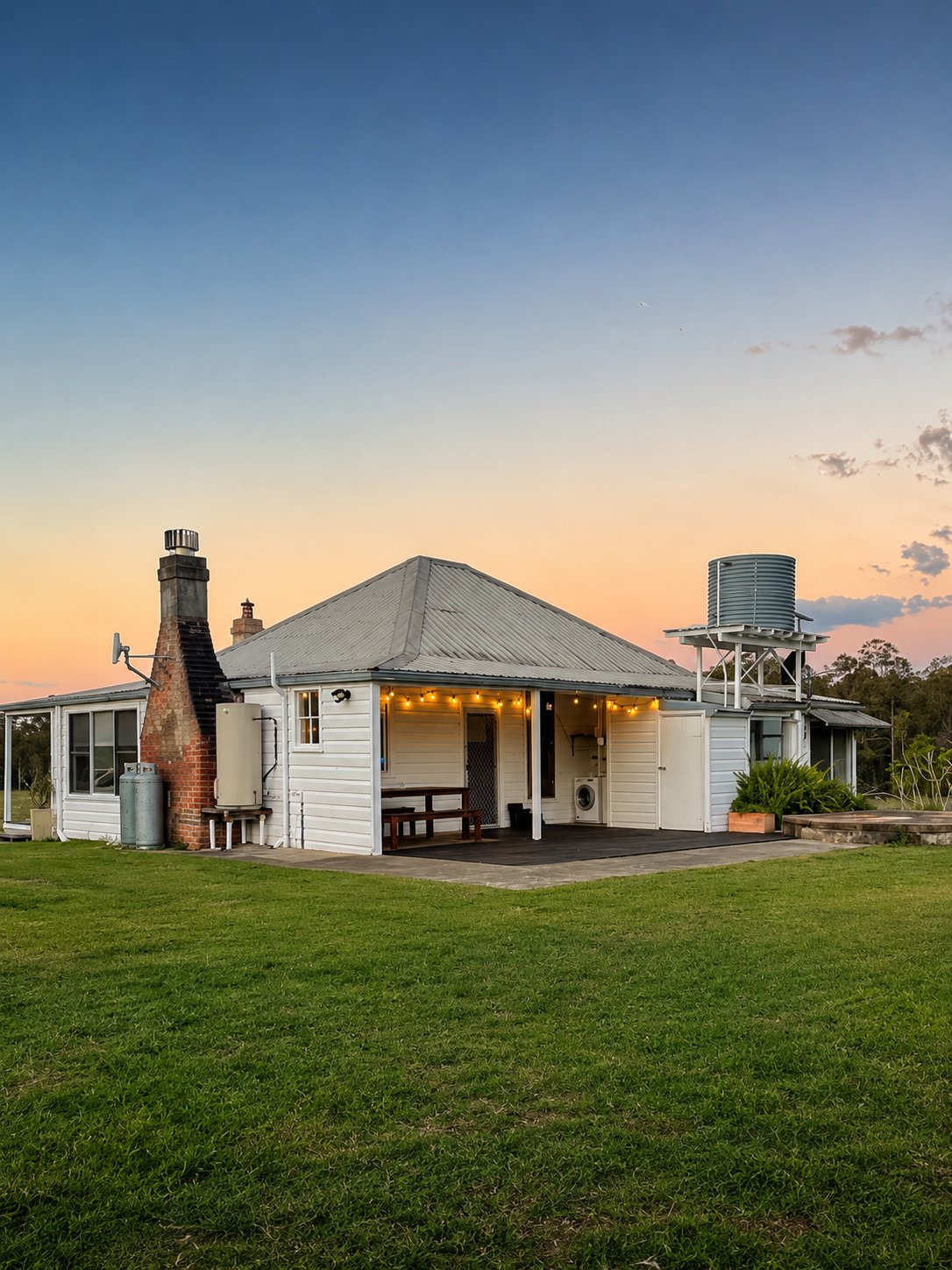
Adeline is hired Friday to Sunday as standard, with exact access and departure times confirmed in the booking agreement, at $8,800 including GST, because the weekend is the format the property is built for. The farmhouse sleeps 9 and two furnished bell tents sleep 4 between them, so existing onsite accommodation sleeps up to 13, and the amenities trailer provides four hot showers and five private toilets in addition to the farmhouse bathrooms, rather than hired portables. Suppliers bump in Friday and pack down Sunday. There is no other event or unrelated accommodation booking during your exclusive-use period.
Amplified music winds down at 11pm on Saturday. Fire-pit use is subject to venue conditions, weather, fire restrictions and the agreed event schedule.
The full picture of a weekend here is on the weddings page.
The short version
- Friday: setup plus a low-effort welcome dinner for whoever is on site.
- Saturday: the wedding, unrushed, with nobody waiting for the space.
- Sunday: breakfast and a slow goodbye while suppliers pack down.
- Say clearly who is invited to which day.
- Keep Friday and Sunday simple — the wedding is the only catered day.
Common questions
The logistics couples ask about before committing to three days.
Do all guests come for the whole weekend?
Usually not, and it works better if they do not. The common shape is that the people staying on site plus close family come Friday night, everyone comes Saturday, and whoever is still there joins Sunday breakfast. Be explicit on the invitation about who is invited to which part.
Does a wedding weekend cost more?
It adds two lighter meals and, if you are covering it, some accommodation. It often saves elsewhere: setup labour drops because you are not compressing bump-in into one morning, and guest transport reduces for anyone staying on site. Venue hire for a weekend is frequently close to a single-day rate at private properties.
What do you feed people on Friday and Sunday?
Keep both simple. Friday night is usually pizza, a spit roast, a grazing table or food trucks — something that does not need service staff. Sunday is pastries, fruit, coffee and eggs. The wedding day is the only day that needs a caterer at full strength.
Who stays on site?
Typically the couple, immediate family and the wedding party. At Adeline the farmhouse sleeps 9 and two furnished bell tents sleep 4 between them, taking onsite accommodation to 13. The rest of the guests stay nearby in Lovedale, Cessnock or Pokolbin.
When does setup happen on a wedding weekend?
Friday, which is the whole point. The marquee crew arrive, the furniture follows, and the styling is done by Friday evening. Saturday morning is then genuinely calm, which is the difference guests notice most in the photographs. Exact access and departure times are set in the booking agreement.