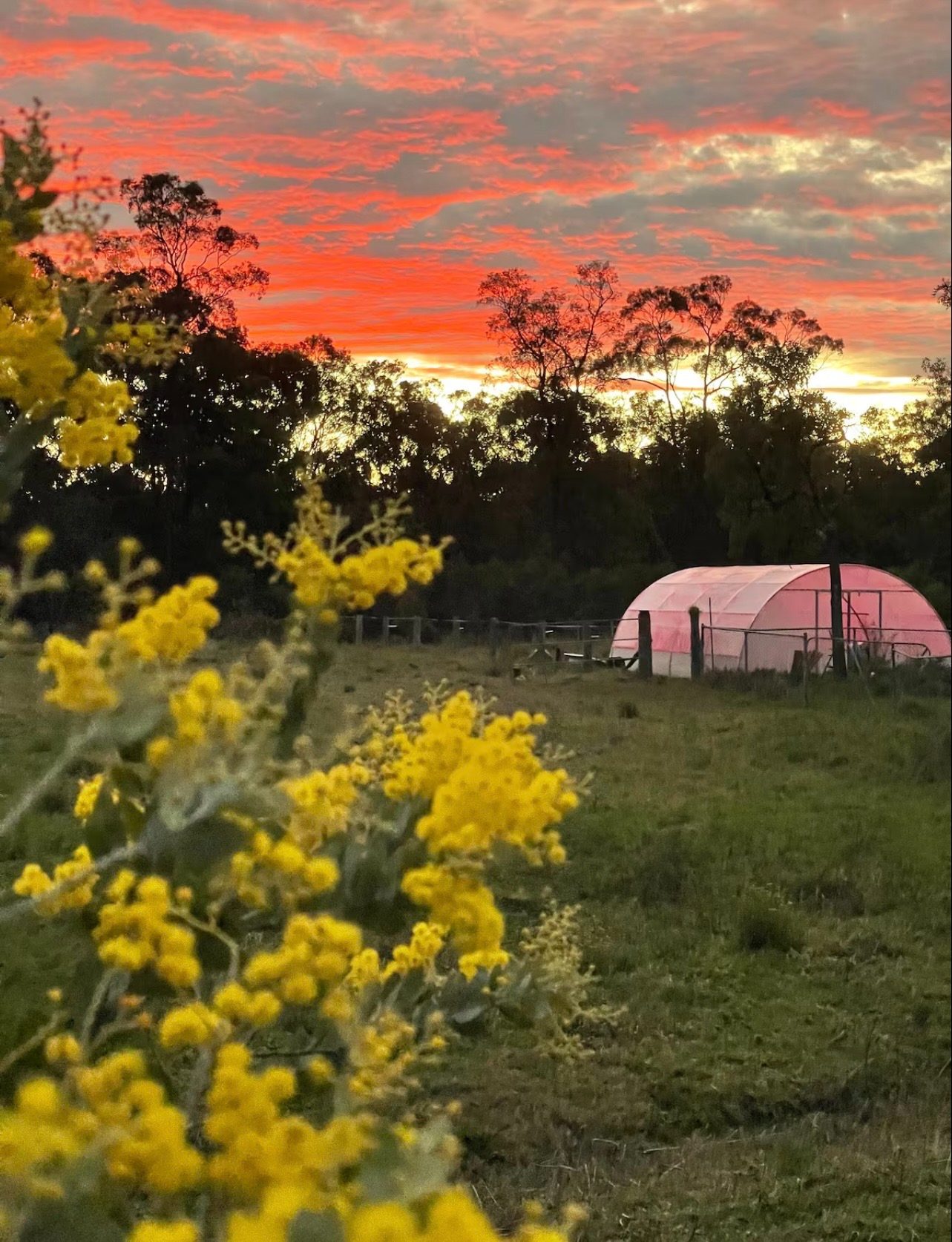
For an outdoor Hunter Valley wedding, late March to early May and mid September to early November are the strongest windows: mild days, lower rainfall than midsummer, and long enough evenings for a golden-hour ceremony.
October and April are the two most contested months, so dates and suppliers go early. Winter is cold but dry, cheap and easy to book, and it photographs beautifully if you commit to fires, heaters and an earlier ceremony.
The date is the first real decision, and it constrains everything after it. Photographers, marquee companies and caterers all book by date, and at a venue that takes one wedding at a time the date is the booking.
So it is worth spending an hour on properly. Here is the Hunter Valley calendar with the trade-off each part of the year asks you to make.
The two strong windows
Late March to early May. Autumn is the region's best-kept promise. The heat has gone, the light turns golden earlier in the afternoon, evenings are cool enough for a jacket rather than a heater, and the vines are turning. Rainfall is easing from the summer peak. The only real constraint is that everyone else knows.
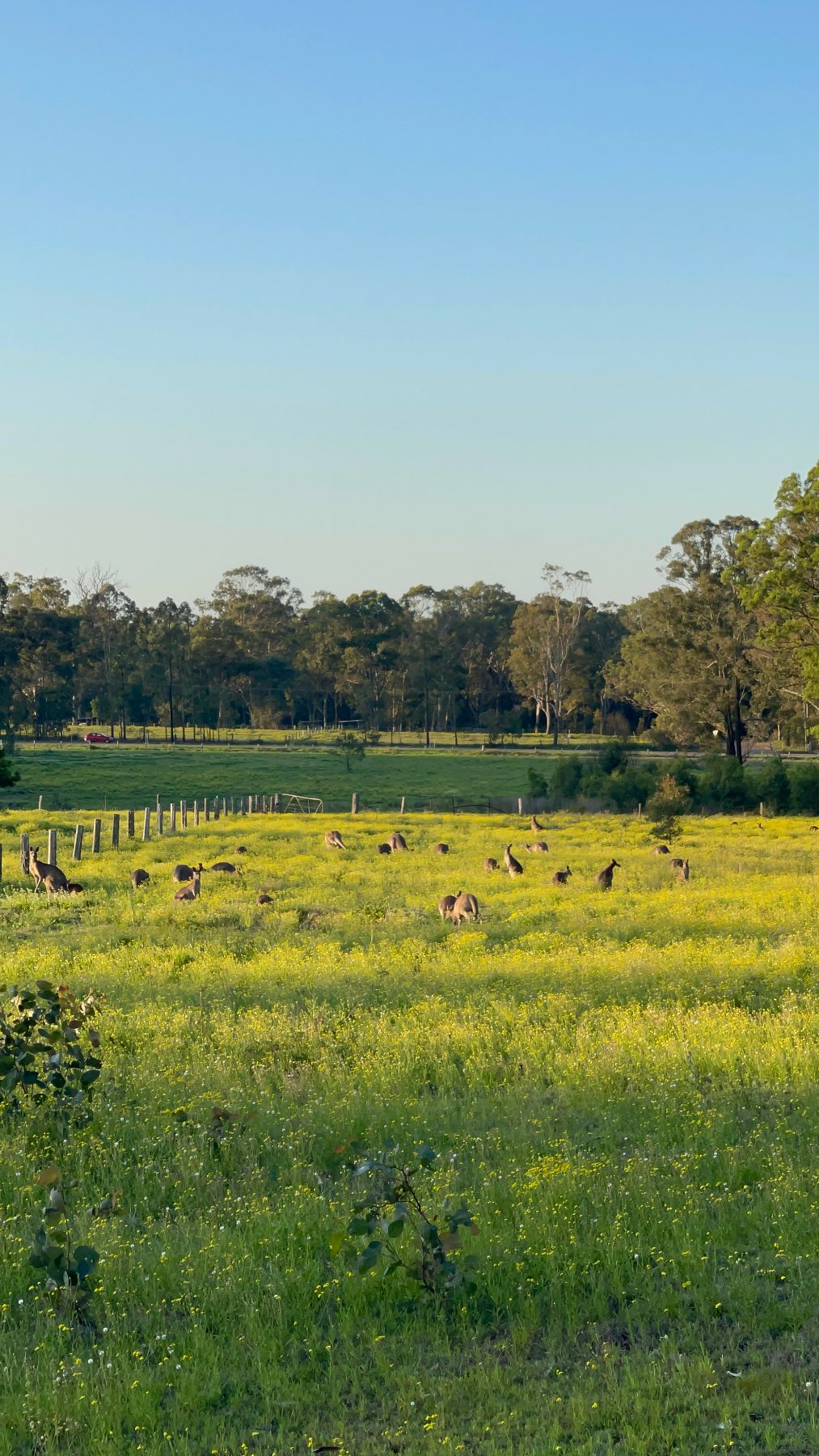
Mid September to early November. Spring warms up without reaching summer heat, the paddocks are green, the wattle is out and the days are long enough that a five o'clock ceremony still gives you a full golden hour. September and early October are also the driest part of the Hunter year.
Month by month
| Month | Typical day | The trade-off |
|---|---|---|
| January | Around 30°C, wettest quarter | Hot and humid, storm risk, long evenings. Manageable with shade and a late ceremony. |
| February | Around 29°C | Same heat, slightly softer light. Still in the wet season. |
| March | Around 27°C | The first genuinely comfortable month. Very heavily booked. |
| April | Around 24°C | Arguably the best of the year. Books twelve to eighteen months out. |
| May | Around 20°C | Beautiful, quieter, and sunset moves earlier. Plan heating. |
| June | Around 17°C | Cold nights, sunset before five. Cheap, available, and lovely if you lean into it. |
| July | Around 17°C | The coldest, and one of the clearest. Fires, heaters, early ceremony. |
| August | Around 19°C | Driest month of the year. Underrated. Wind is the variable to watch. |
| September | Around 22°C | Spring arrives, rainfall still low. Excellent value before the October rush. |
| October | Around 25°C | The most contested month in the region. Book early or look at September. |
| November | Around 27°C | Warm, long evenings, still very popular. Watch for the first hot spells. |
| December | Around 29°C | Hot, festive, competing with everyone's Christmas calendar. |
Approximate long-term averages for the lower Hunter, given as a planning guide rather than a forecast. Source: Australian Bureau of Meteorology climate data — see bom.gov.au climate data and check the Cessnock station records when comparing specific dates.
The four factors worth weighing
1. Light, not temperature
The mistake is choosing a month on temperature alone. What determines the shape of your day is when the sun sets. In December it is around 8pm, so a 5pm ceremony leaves three hours of light and dinner happens in daylight. In June it is before 5pm, so the same 5pm ceremony happens in the dark.
Pick the month, then build the run sheet around sunset on that date. Your photographer will thank you.
2. Rain, in the right way
The Hunter's heaviest rain falls in summer and early autumn, usually as storms rather than all-day drizzle. Winter and early spring are drier. But a wet-weather plan is not optional in any month, and no month is dry enough to skip it.
3. What is available
Peak dates go first, and not just the venue. The photographer you want, the marquee company with the sailcloth tent, the caterer everyone recommends — all of them fill October and April first. If your list of must-have suppliers is long, an off-peak date buys you all of them.
4. Cost
Off-peak and midweek dates are cheaper across most of the supplier chain, sometimes materially. A Friday in September is a very different quote to a Saturday in October, for the same wedding.
The case for winter, briefly
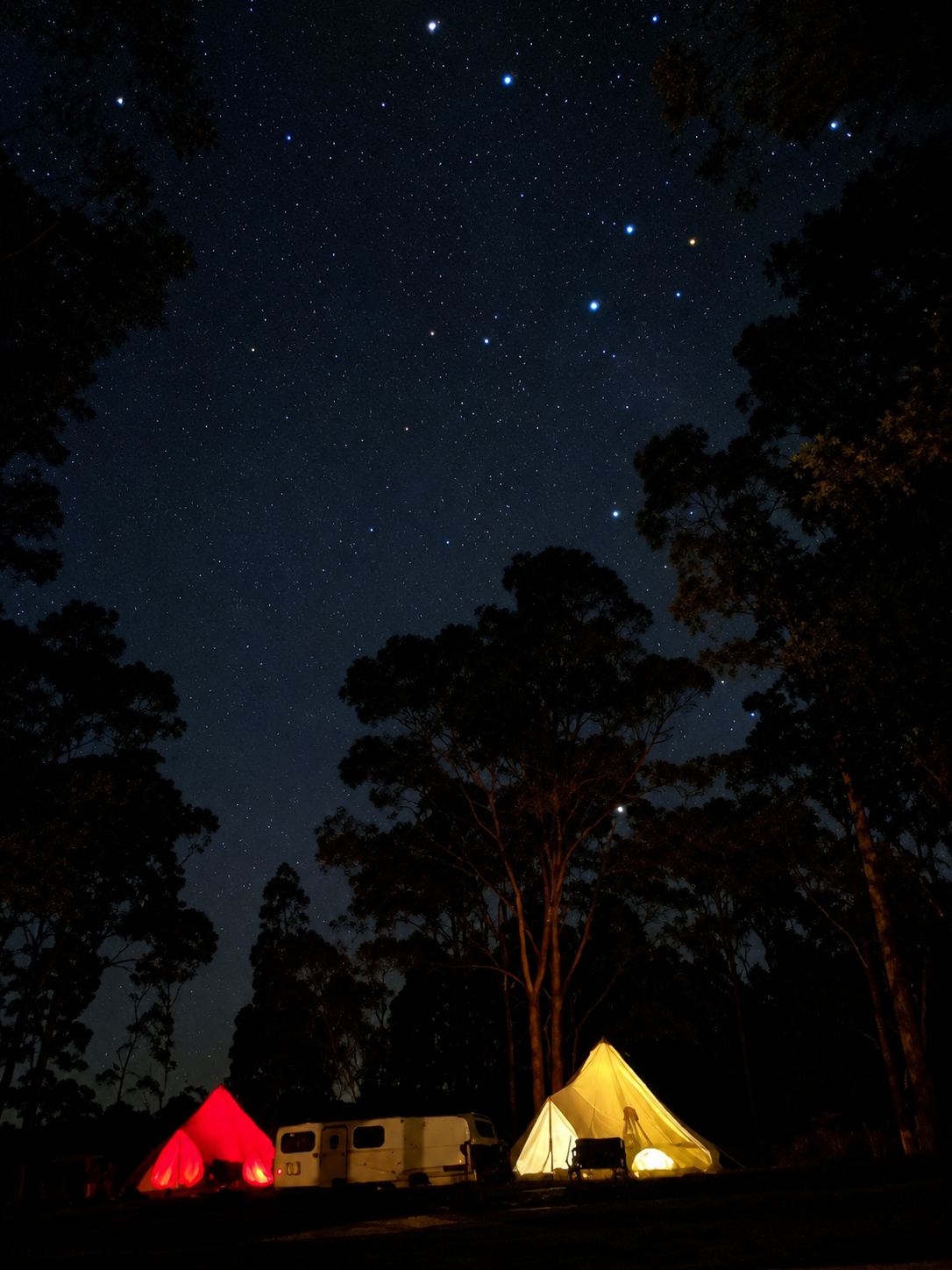
Nobody arrives at a June wedding by accident, but the couples who choose it are rarely sorry. It is the driest half of the year, the light is low and clean all afternoon, the fire pit stops being a nice extra and becomes the centre of the night, and you can have almost any supplier you want at almost any date you want.
What it asks in return: heating in the marquee, an earlier ceremony, and telling guests plainly to dress for cold. Do those three and a winter wedding here is as good as any month on the list.
There is no bad month. There is a month that suits the wedding you are picturing, and a plan that has to match it.
How to choose yours
- Want the safest weather? April, or late September.
- Want long evenings and dancing in daylight? November.
- Want the best value and full supplier choice? May to August.
- Want the greenest paddocks and the wildflowers? September and October.
- Booking under twelve months out? Look off-peak first; it is where the availability is.
We host one wedding at a time and there are roughly forty usable weekends a year, so the honest advice is to have the date conversation before you fall in love with a season. Tell us the months you are weighing up and we will tell you what is actually open.
Availability and what a weekend includes: weddings at Adeline.
The short version
- Best windows: late March to early May, and mid September to early November.
- October and April are the most contested dates in the region.
- Build the run sheet around sunset, not the temperature.
- Winter is dry, cheap and available, and needs heating and an early ceremony.
- Every month needs a wet-weather plan.
Common questions
How couples usually narrow it down.
What is the best month for a Hunter Valley wedding?
April and October are the two most popular for good reason: mild temperatures, reliable light and comfortable evenings. Late March, early May and late September are nearly as good and slightly easier to book.
Is summer too hot for a Hunter Valley wedding?
January and February regularly reach the low thirties, and the Hunter gets its heaviest rainfall in the same window. Summer weddings work with a late-afternoon ceremony, real shade, water for guests and a marquee with open sides, but they take more managing than an autumn date.
Can you have a winter wedding in the Hunter Valley?
Yes, and winter is drier than summer. Days sit around 17 to 18 degrees and nights get genuinely cold, so plan for heating, an earlier ceremony because the sun sets before five, and a fire pit. Availability and pricing are at their best.
When should we book to get the date we want?
For a peak date in October, November, March or April, twelve to eighteen months ahead is normal, and popular photographers and marquee companies book out first. Winter and midweek dates can often be held far closer in.
How many weddings can Adeline Estate host?
One at a time, and around forty usable weekends a year. That is the reason the date conversation should come before almost everything else.