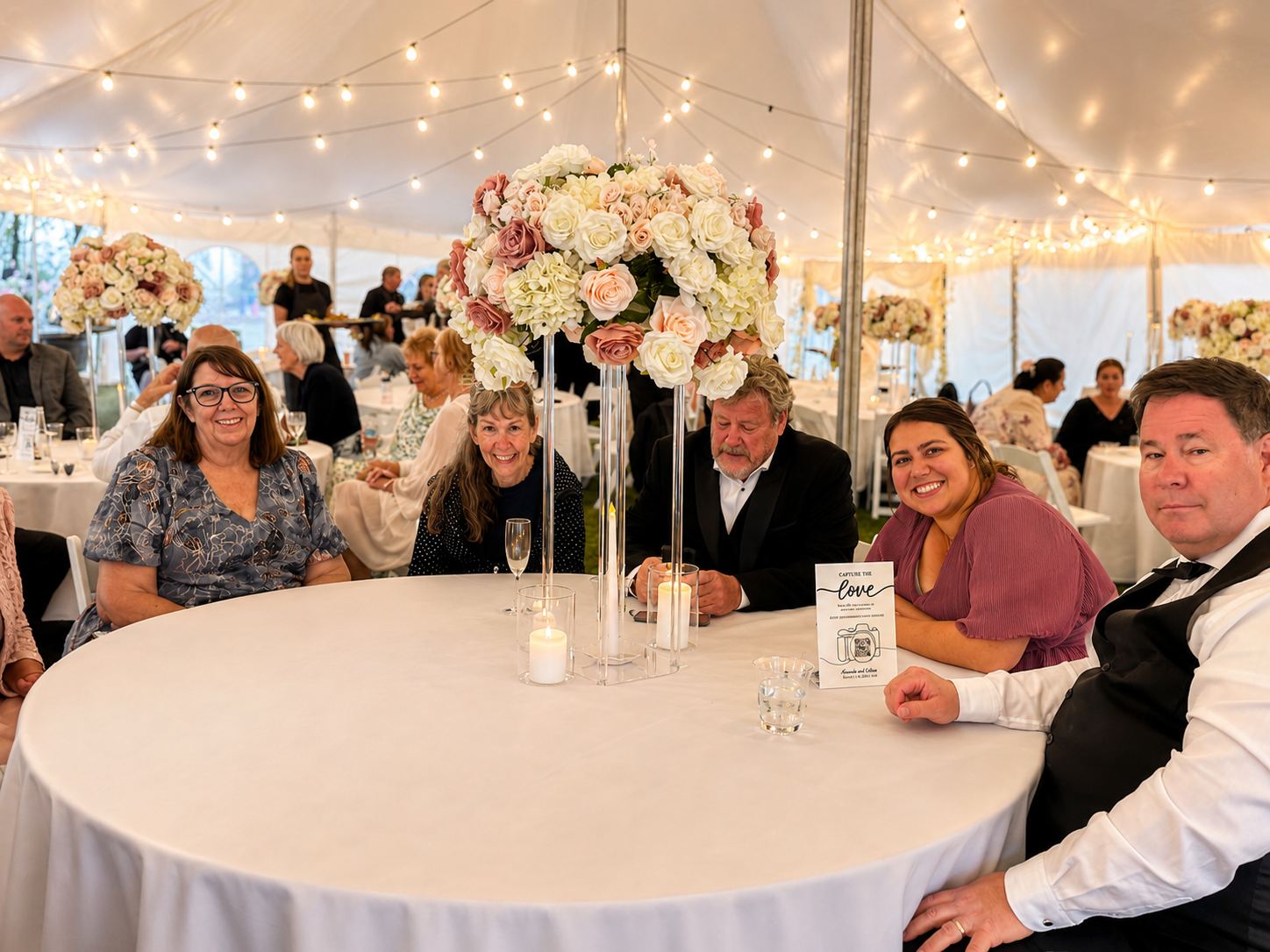
A DIY wedding means you hire a venue that allows you to organise the day yourself, then appoint each supplier and manage the run sheet rather than buying a package. In the Hunter Valley that almost always means a private property with power, water, bathrooms and multi-day access.
The work divides into three: things worth making yourself (stationery, signage, favours, some styling), things to always hire (marquee, catering, bar, power, bathrooms), and things to hand over in the final month (coordination, bump-in, bump-out).
DIY does not mean doing everything yourself. It means creative control — choosing the food, the format, the people and the feel, rather than picking a package tier. The couples who enjoy it decide the shape early, engage professionals for the specialist parts, and keep the handmade bits to things that can be finished well ahead.
This is the order we watch it work in, from the venue decision through to Sunday pack-down.
Start with the site, not the styling
Everything downstream is set by what the property already provides. Before you think about a colour palette, get written answers on six things — the more that is already here, the less you organise.
- Access hours. Multi-day access is the single biggest thing that makes a DIY wedding calm.
- Power. How much, where, and what your caterer will need on top of it.
- Water. Potable supply and a wash-up point.
- Bathrooms. Plumbed facilities, or portables you have to hire and pay to service.
- Ground. Where a marquee can actually go, and what happens to that ground after rain.
- Restrictions. Noise curfew, supplier rules, guest cap, whether anyone else is on site.
Two properties at the same hire fee can offer very different things once you look at what is already on site. That is the comparison that matters, not the headline number — and it is where a well-equipped property saves you the most work.
The twelve-month order of work
| When | What |
|---|---|
| 12–18 months out | Venue and date. Everything else is scheduled around this. |
| 10–12 months | Marquee company, caterer, photographer. These three book furthest ahead. |
| 8–10 months | Celebrant, bar service, music. Confirm guest numbers within about ten. |
| 6 months | Furniture and equipment hire. Site visit with the marquee company and the caterer together. |
| 3 months | Styling decisions locked. Anything handmade starts now, not later. |
| 2 months | Run sheet written. Send it to every supplier and ask them to correct it. |
| 1 month | Coordinator briefed. Final numbers, dietaries, seating, transport confirmed. |
| Week of | Deliveries scheduled by the hour. Wet-weather decision deadline agreed. |
The single most useful document you will produce is the run sheet, and the most useful thing you can do with it is let your suppliers correct it.
What is worth doing yourself
The test is simple: can it be finished two weeks before the wedding, and does nothing break if it is imperfect?
- Stationery and signage. Invitations, seating chart, bar menu, order of service. High visual impact, no deadline pressure.
- Table styling. Candles, vessels, runners, place settings. Buy or borrow rather than make, and pack it in labelled boxes by table.
- Music for the non-band parts. Playlists for arrival, dinner and late night.
- Welcome night food. On a weekend wedding, Friday is genuinely DIY-able. Sunday breakfast even more so.
- Foliage and simple arrangements. Greenery is forgiving. Bridal florals are not — those are worth a florist.
- Guest information. A one-page website with accommodation, transport, timings and the wet-weather plan saves you a hundred messages.
What to hand to professionals
These are the specialist parts. Engaging people who do them every weekend is what frees you up to enjoy the rest.
- Marquee installation. Structural, weather-dependent, and it has to be right.
- Alcohol service. You can supply the drinks; professional bar staff or a mobile bar should serve it, with RSA and licensing confirmed for your event and supplier.
- Catering at scale. Cooking for eighty is a different job to cooking for twenty, and food safety is not the place to improvise.
- Power and electrical. Distribution and anything involving a lead across a wet paddock.
- Bathrooms. Either the venue has plumbed facilities or you hire proper ones. Guests notice this more than anything else on the list.
- Photography. The one thing you cannot redo.
What to hand over in the last month
Three jobs are worth handing over so you can be a guest at your own wedding:
Coordination. Someone holding the run sheet who is not getting married. An on-the-day coordinator is optional, and it is the best-value line in a DIY budget.
Bump-in. Someone on site when the marquee crew, the furniture truck and the caterer arrive — often across two days.
Bump-out. Hire collection, bottles, bins, lost property. With Sunday access it is unhurried, and scheduling it in advance means nobody is thinking about it on the day.
DIY does not mean doing it yourself on the day. It means choosing everything yourself beforehand.
Four things worth getting right
- Finish handmade jobs a month out. The final fortnight is already full.
- Keep one run sheet. One shared timeline, corrected by your suppliers, is what keeps the day on time.
- Plan Sunday before the wedding. Collections and clean-up are easy when they are scheduled in advance.
- Compare inclusions, not hire fees. Bathrooms, power and access hours are what actually differ between two similar-looking venues.
What makes it easy here
The estate is hired Friday to Sunday, at $8,800 including GST, so bump-in happens the day before and pack-down happens Sunday rather than at midnight. The homestead kitchen, power, water, fire pit and level marquee ground are included, and the amenities trailer provides four hot showers and five private toilets in addition to the farmhouse bathrooms, so hired portables are not on your budget.
The farmhouse sleeps 9 and two furnished bell tents sleep 4 between them, so existing onsite accommodation sleeps up to 13, which means the people helping are already on site from Friday. Amplified music winds down at 11pm. Fire-pit use is subject to venue conditions, weather, fire restrictions and the agreed event schedule.
For the reception you can go open air, add one spider marquee at $1,000 or two at $2,000 for shade and light-rain cover, or bring your own external supplier for a fully enclosed structure. Nothing about a marquee is compulsory.
Bring your sizes and your caterer's requirements when you visit and we will tell you plainly what works on this ground.
The infrastructure a DIY plan runs on is listed on our BYO wedding page.
The short version
- DIY means creative control, not doing everything yourself.
- Book venue, marquee, caterer and photographer first. Everything else follows.
- DIY the things that can be finished a fortnight early.
- Hand the specialist parts to professionals — bar, catering at scale, electrical.
- An optional coordinator means you enjoy the day rather than run it.
Common questions
What couples ask before committing to organising it themselves.
What is a DIY wedding venue?
A venue that hires you the site and lets you organise the day yourself — your own suppliers, your own timeline, your own styling. It is usually a private property rather than a commercial venue, and the infrastructure it provides (power, water, bathrooms, level ground, access hours) is what determines how workable the DIY plan is.
How far in advance should you plan a DIY wedding?
Twelve to eighteen months is comfortable. Venue and date first, then caterer and photographer inside the first three months, because they book out furthest ahead. The last two months are for the run sheet, the seating and the details.
What should you never DIY at a wedding?
Anything with a licence, a safety implication or a hard deadline on the day. Marquee installation, alcohol service, commercial catering at scale, power and electrical, and bump-out. Also avoid DIYing anything that has to happen while you are getting ready.
Is a DIY wedding actually cheaper?
You remove the venue margin on food and drink, and you scale each choice to your priorities rather than buying a package tier. What DIY reliably buys is control over where the money goes. At Adeline, exclusive-use hire is $8,800 including GST for Friday to Sunday and includes two nights of accommodation for up to 13 people.
Can you DIY a wedding at Adeline Estate?
Yes — the estate is BYO and you have it from Friday to Sunday, which is what makes a DIY plan easy rather than hard. The homestead kitchen, power, water, fire pit and level marquee ground are part of the hire, at $8,800 including GST. The amenities trailer provides four hot showers and five private toilets, in addition to the farmhouse bathrooms.